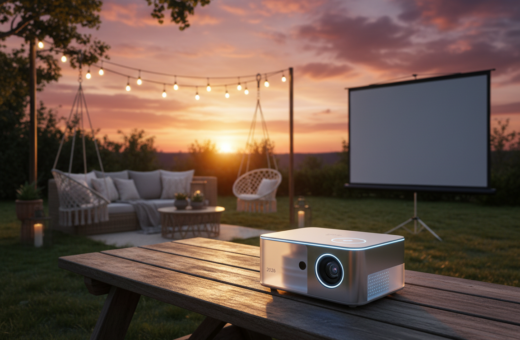
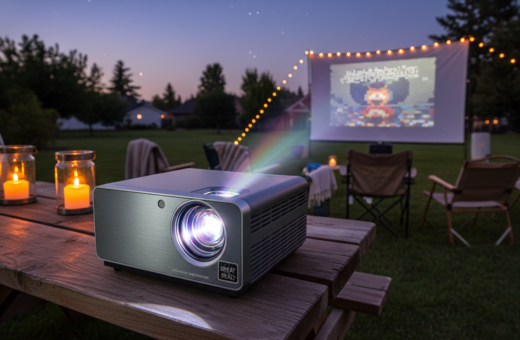
He took a compact XGIMI MoGo 4 Laser into gusty campsites to see if a small cinema setup could stand up to wind and dust. The unit’s triple laser light source promised bright visuals, but real nights bring shifting tents, screens, and surface movement. This field test shows what matters beyond brightness: stability, dust resistance, and reliable image hold.
Many people assume a standard home device will work fine under the stars, yet experiences from camping trips suggest otherwise. Tests compared indoor units to models built for travel and rough conditions.
Whether watching movies, playing games, or hosting a late-night screening, the right choice changes the night. By the end, readers will know why selecting the correct projector affects image integrity, ease of setup, and night-long enjoyment.
Key takeaways: Specialized compact projectors handle wind better than standard home units. Portability and rugged design matter for camping movie nights. Stability and dust control determine if a night succeeds.
The Reality of Outdoor Cinema
Setting up a screen under open skies reveals equipment frailties that few expect until wind picks up. Nights by a lake or in a backyard test a device in ways a living room never will.
He found that a standard home projector can lose image hold and clarity when exposed to dust and shifting air. Even small gusts move screens and surfaces, which blurs focus and ruins a scene mid-film.
Years of field testing showed a clear pattern: some projectors survive simple backyard movie nights, while others fail under real camping stress. Fans and vents attract grit, and moisture shortens component life.
Preparation changes the outcome. Simple steps—sturdy screens, raised mounts, and weather-aware placement—help. Picking devices designed for rugged use reduces the chance of hardware failure.
- Expect wind and dust to affect focus and color.
- Plan for movement with secure mounting and weighted supports.
- Choose the right unit for long nights away from a controlled home environment.
Understanding Portable Projector Outdoor Performance
A successful field screening comes down to measurable brightness, true resolution, and how a device handles ambient light.
Brightness and Lumens
Brightness specs vary by lab method. ANSI lumens give a realistic view of usable light, while other numbers can be inflated for marketing.
He found the XGIMI MoGo 3 Pro’s 450 ISO Lumens produced a clear image as dusk fell, but it did not match the impact of units rated near 1000 ANSI lumens in areas with light pollution.
Native 1080P yields sharper detail than a device that only upscales to 4K. Upscaling adds pixels but not the true detail native resolution delivers.
For open-air movie viewing, prioritize a real 1080P unit over flashy spec sheets. Contrast ratio also matters: lower-cost models often trade contrast for a brighter rating, which harms image depth at night.
- Tip: Aim for at least 1000 ANSI lumens for sites with stray light.
- Tip: Choose native resolution first; brightness helps, but clarity starts with real pixels.
- Tip: Check contrast ratio to avoid washed-out black levels on your screen.
Why Wind and Weather Impact Your Setup
Wind and weather decide more about your night than any spec sheet ever will. A gust can make the image wobble and turn a good film into an eyesore.
Stability matters. He tested several mounting options, including the XGIMI MoGo 3 Pro’s 130° adjustable stand, and found secure mounts prevent image shake. Heavy-duty tripods and weighted bases cut movement and lower the risk of a fall.
Stability and Mounting Solutions
Even slight motion stresses internal components. Continuous vibration strains the battery and power system and shortens device life.
- Wind is the primary enemy: gusts make the image jitter and force constant realignment.
- High-quality models: better build quality means they resist vibration during long camping sessions.
- Check ambient light: angle your unit to reduce glare and preserve brightness and image contrast.
Always check the forecast and secure your system. For more tips on safe placements and weather-aware setups, see outdoor projection advice.
“Proper mounting extends life and keeps your nights running smoothly.”
Essential Features for Open-Air Viewing
A reliable open-air setup depends on features that keep image and sound steady when conditions shift.
Power and battery life top the list. He recommends a device with a high-capacity battery so the movie runs for hours without a generator. Good power management also preserves battery health and avoids sudden shutdowns.
Audio matters. Integrated speakers are fine for small groups, but for true cinema sound choose a system that supports external speakers or Bluetooth. That adds depth and keeps dialogue clear over ambient noise.
Streaming and connectivity simplify setup. A built-in smart system removes extra boxes and lets him access apps quickly. Before any trip, he checks ports and Wi‑Fi support so the device links to preferred streaming sources and audio gear.
- Durable screen—pick material that resists wind and holds tight for steady brightness and image quality.
- Balanced build—the best projectors for camping blend light weight with useful features.
- Ports and options—HDMI, USB, and audio outputs prevent surprises at setup.
Choosing the right features creates an immersive viewing experience that feels close to home.
Top Picks for Backyard Movie Nights
He narrowed top models to those that balance brightness, battery life, and simple setup. These choices focus on real-world use for a backyard movie night where wind or stray light can ruin the show.
Compact Smart Models
XGIMI MoGo 4 stands out with a 71Wh battery and laser light that boosts color accuracy and brightness. Its smart system makes streaming fast and the 1080p resolution keeps the image crisp on a 100-inch screen.
Battery-Powered Versatility
Samsung The Freestyle 2nd Gen brings a unique design and a built-in Gaming Hub. Long battery life and easy streaming mean more hours of movies and games without a power source.
All-in-One Systems
XGIMI MoGo 3 Pro simplifies setup with built-in speakers and a 130° adjustable stand. When comparing these models, consider price and the specific features that matter most for family nights and camping trips.
“Choose the model that matches your needs: brightness, battery, and sound make the night.”
High-Performance Laser Models for Serious Enthusiasts
For enthusiasts who chase the truest color and highest brightness, laser models redefine what a home cinema can do. These units push image quality and sustained output into a professional range.
XGIMI HORIZON S Max stands out with Dual Light 2.0 and a massive 3100 ISO lumens output. That level of brightness fights ambient light and keeps a crisp image on a large screen.
XGIMI MoGo 4 Laser uses a triple laser light source to deliver 550 ISO lumens and a 1000:1 contrast ratio. Laser tech gives superior color accuracy that LED models struggle to match.
Serious viewers also get advanced audio and support for high-resolution content. These systems often include smart alignment, auto-keystone, and several hours of battery-backed streaming so he can move the unit between home and camping spots with ease.
- Why buy: brighter lumens for ambient light.
- Why pay more: better color, audio, and lasting output.
- Setup perks: quick alignment and robust speakers for cinema-grade sound.
“For those who demand the best, laser models are worth the investment.”
Budget-Friendly Options for Casual Viewers
Casual viewers often want a simple, affordable unit that still handles evening screenings without fuss. He looks for items that balance cost, ease of use, and enough brightness to keep movies clear as dusk falls.
Balancing Cost and Quality
Anker Nebula Capsule II is a common pick for campers and light home use. It offers 200 ANSI lumens and 720p resolution, with decent battery life for short nights. For many people, that is enough to enjoy a film without a heavy price tag.
LG CineBeam Q raises the bar with 500 ANSI lumens and 4K resolution. It shows how models can bring premium output at a fair price. Streaming apps and a smart system often come built in, which cuts the need for extra sources.
- Tips: Aim for at least 720p and reasonable battery hours.
- Check power: some budget models need a constant power source.
- Read reviews: price does not always predict durability in windy or dusty conditions.
“By focusing on core features—resolution, lumens, and battery—people can find a great value without excess bells.”
Optimizing Your Audio and Visual Experience
Fine-tuning both sound and image is the quickest way to upgrade any open-air viewing session. Small changes deliver big gains in clarity, color, and immersion.
External Sound Systems
He pairs a compact external speaker or a small soundbar with a unit to get fuller sound than built-in speakers can offer. Built-in speakers often lack bass and room-filling volume for a true cinema feel.
Use a Bluetooth or wired audio source and place speakers near the audience, not the screen. This improves dialogue clarity and keeps music from sounding thin during movies or games.
Test the audio before showtime to confirm the power and connection cables are secure and out of the way.
Screen Selection
Choose a quality screen rather than a sheet. A proper screen reflects light better and preserves contrast and image sharpness.
Keep the screen taut to prevent wind-induced ripples that distort the image. A well-tensioned surface helps a 1080p resolution unit show crisp detail on larger sizes.
- Position: set the screen away from direct ambient light to keep blacks deep and colors vivid.
- Resolution: aim for at least 1080p so video remains sharp on a big canvas.
- Power & battery: verify battery charge or power source to avoid mid-show shutdowns.
“Small investments in sound and a taut screen change an evening from usable to memorable.”
Critical Tips for Protecting Your Equipment
Small preventative steps prevent big failures. He treats gear care as a core part of every setup to avoid ruined nights and costly repairs.
Always carry a padded case to shield the lens and internal parts while traveling. A case reduces shock, dust, and stray moisture that shorten device life.
Charge the battery fully and bring a backup power plan. If you plug into campsite power, use a surge protector to guard electronics from spikes.
Keep the unit out of direct sun and away from damp ground. Excess light and moisture both harm optics and reduce brightness and image quality over time.
- Anchor the screen so wind can’t blow it into the beam and ruin alignment.
- Clean lens and vents before each show to maintain lumens and prevent overheating.
- Secure cables and speakers to avoid tripping and accidental pulls during the night.
Regular care keeps projectors and related gear running for many evenings. Small routines at home and on the road protect your investment and improve every viewing.
“A little preparation at setup saves time, money, and frustration later.”
Navigating Local Regulations and Environmental Etiquette
Before screening in public spaces, it’s wise to confirm local rules and be mindful of neighbors and wildlife.
Check permits and rules. Many parks limit amplified audio or require a permit for public use. He always confirms allowed hours and any fees before arrival.
Respect others. The light from a screen and bright beam can distract nearby campers. Keep angles low and avoid pointing the light toward campsites or roads.
- Verify streaming rights if showing paid content in a public area.
- Keep audio levels modest and prefer directional speakers to limit sound spread.
- Pack out all trash and restore the site to its original state.
- Consider wildlife; bright light and loud sound can stress animals in remote spots.
He follows quiet hours and leaves no trace so that future groups can also enjoy camping movie nights without conflicts.
“Responsible use keeps open-air cinema welcome in parks and campsites.”
Conclusion
A few careful choices before sundown keep images steady and nights memorable. Secure the screen, aim the light thoughtfully, and pick gear that matches brightness and resolution needs. These steps protect the image and extend equipment life.
Good audio and a tested setup turn a simple movie into a true cinema experience. Practical habits—cleaning lenses, anchoring mounts, and packing spare cables—reduce surprises and keep viewing smooth.
Plan the night and respect the site. With solid setup and care, movie nights become repeatable, low-stress events. He can now relax and enjoy the movie night under the stars for many nights to come.