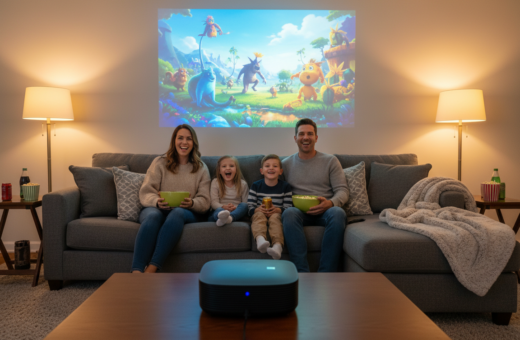
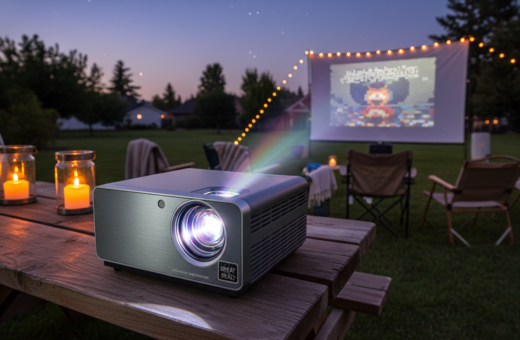
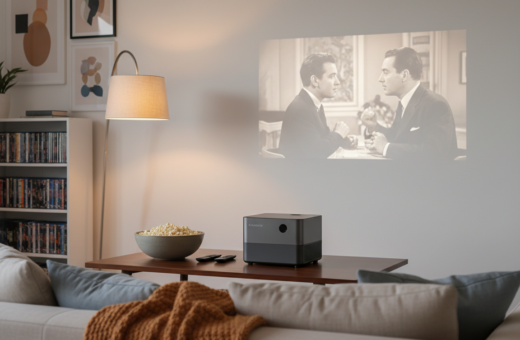
Outdoor movie nights and casual home cinema have changed. They now rely on compact devices that fit in a backpack and still deliver a sharp image and true sound.
More than half of recent models are ultra-compact, aimed at backyard use and travel. They pair LED or laser light sources with smart streaming to make setup fast.
Shoppers should focus on resolution, brightness, contrast, and built-in speakers. Those features shape picture quality and the overall viewing experience in bright or dark rooms.
This guide looks at popular models, battery life, size, and connectivity. It shows how design and performance affect setup, sound, and long-term use for movies and gatherings.
The Evolution of Backyard Entertainment
Backyard movie setups have shifted from fixed living-room systems to flexible, on-demand gear that travels easily. This change mirrors a larger market trend and a shift in how people plan gatherings.
Market growth has driven much of that change. The global portable projector market reached USD 1.99 billion in 2026 and is set to approach USD 3.60 billion by 2034. Analysts note a steady 6.8% CAGR during that span.
Those numbers reflect more than sales. They show that projectors now meet consumer expectations for brightness, sound, and setup speed. As a result, projectors move outdoors for lawn screenings and tailgate meetups, rather than staying in basements.
- Mobility: A single compact projector can replace bulky equipment.
- Performance: Advances give clearer images in varied light.
- Adoption: Portable projector choices suit both casual and cinematic uses.
In short, the modern shift toward lightweight displays has reshaped home entertainment and made outdoor movie nights easier to plan and enjoy.
Understanding the Best Portable Projector Comparison 2026
Consumers now expect small units to deliver big-screen performance and simple streaming. This section outlines which smart features and development trends shape current choices.
Smart Features
On-board streaming like Google TV removes extra boxes and cuts overall price for casual users.
AI-driven tools such as auto-focus and keystone correction speed the setup and improve the picture with minimal input.
Wireless upgrades — Wi‑Fi 6 and Bluetooth 5.2 — keep connections steady during HD playback and mobile casting.
Development Trends
Recent models adopt LED and laser light sources to boost resolution and lamp life over older options.
“Designers are squeezing cinema-grade resolution into compact frames while keeping battery and weight in check.”
- Native streaming support for cleaner setup
- AI-assisted alignment for fast, reliable images
- Compact form factors that still rival home systems
Key Usage Scenarios for Outdoor Viewing
Different outdoor scenes demand different features, from bright beams to long battery life. Choosing gear for each setting helps ensure a smooth viewing experience and fast setup.
Backyard Movie Nights
For relaxed backyard movie nights, a projector with 200–300 ANSI lumens keeps the screen clear under starlight. Models with built-in speakers or Bluetooth reduce cabling and speed setup.
Camping Trips
Camping calls for a lightweight portable projector with strong battery life. A unit that delivers at least 2.5 hours of continuous power lets a group enjoy a full movie without external power.
Tailgating Events
Tailgates need much higher brightness. Many outdoor events require 3000+ ANSI lumens to overcome ambient light and retain contrast on the screen. Robust audio or the option to pair an external speaker improves the sound and crowd experience.
- Travel use: Compact devices turn hotel walls into a makeshift screen for better viewing than a tablet.
- Streaming: Built-in streaming features simplify playback at events.
- Planning: Always check the battery and power options for the expected run time.
Evaluating Resolution for Sharp Imagery
Sharp imagery starts with resolution, which sets the limit for how large a scene can stretch without blur.
Resolution is the primary factor that determines how crisp the image will appear on an outdoor or indoor screen. Higher resolution lets viewers sit closer and still see fine detail.
For many home setups, 1080p is the practical standard. It delivers strong picture quality while keeping file sizes and streaming demands reasonable.
The Nebula Capsule 3 offers Full HD 1080p and 200 ANSI lumens, making it a balanced device for casual lawn nights and small living-room use. However, even a sharp picture will look washed out if brightness is too low for the room.
“Higher resolution allows for larger screens without visible pixels.”
- 720p works for tight budgets and small screens.
- 1080p gives clear, reliable picture quality for most viewers.
- 4K suits dedicated rooms where cinema-level detail matters.
The Importance of Brightness and ANSI Lumens
Not all light is equal: the source type and ANSI lumen rating shape contrast and color accuracy on the screen.
Brightness is measured in ANSI lumens, and that number guides how well a device performs in bright or dim conditions. The Nebula Mars 3, for example, offers 1000 ANSI lumens, which makes it suitable for daytime and many backyard viewing setups.
Light Source Types
Modern models use either LED or laser light sources. LED delivers long life and steady output, while laser can push higher brightness and tighter contrast for larger screens.
For a dark home room, 100–200 ANSI lumens usually give a clear picture. For outdoor or sunlit areas, aim for 300+ lumens to overcome ambient light and keep the picture sharp.
- Distance matters: Moving the device farther from the screen reduces perceived brightness; plan the setup accordingly.
- LED advantages: Consistent output and long service life for everyday use.
- Laser advantages: Higher peak brightness and improved color accuracy for immersive viewing.
“Match lumen output to your environment to avoid a washed-out image.”
For a deeper primer on how lumens relate to real-world setups, readers can learn more about how lumens work.
Battery Life Considerations for Remote Locations
Reliable battery runtime decides whether an outdoor screening finishes with the credits or cuts out early. In remote use, the projector’s charge and the screen position set expectations for how long a group can watch.
Most films run between 1.5 and 2.5 hours, so a good battery should sustain brightness for that span. The Nebula Capsule 3 delivers roughly 2.5 hours on a single charge, which covers many standard-length movies and presentations.
Keep in mind that higher brightness settings drain the battery faster and reduce overall life. Lowering lumen output or choosing power-saving modes extends run time but may affect picture quality on larger screens.
- Plan ahead: match expected runtime to film length.
- Bring backup: pair with a power bank or small power station for extended sessions.
- Adjust settings: tone down brightness to conserve battery without losing the image.
Speaker Quality and Audio Integration
Audio quality often determines whether a backyard film night feels amateur or polished. Clear sound brings the image to life and keeps dialogue intelligible across a lawn or living room.
Built-in Audio
Many modern projectors include improved speakers and Dolby Audio to enhance clarity and bass. These systems work well for small rooms and casual movie nights. The Nebula Capsule series, for example, uses 5W–8W speakers. That output handles small gatherings but may lack punch for larger outdoor screenings.
External Speaker Pairing
Pairing an external Bluetooth speaker is the easiest way to upgrade sound for bigger spaces. It reduces echo and makes dialogue clearer at a distance.
- Match speaker power to space size: larger lawns need more watts and wider dispersion.
- Low-latency Bluetooth: keeps audio synced with the image on the screen.
- Standalone setup: high-quality audio integration lets the unit act as a compact home entertainment hub.
“Good speakers make every scene feel intentional and immersive.”
Connectivity Options for Seamless Streaming
A modern setup depends on flexible inputs and wireless options to stream shows without extra boxes. A well-connected projector simplifies the process and shortens setup time for backyard or living-room screenings.
Wired ports like HDMI support consoles and Blu-ray players. USB-C covers newer phones and laptops and can carry power and video in one cable.
Built-in Wi‑Fi is essential. It lets users run apps directly on the device and avoids extra streaming sticks or cables.
Bluetooth pairing removes speaker clutter and links wireless headphones or soundbars for crisp audio. Casting tech such as Chromecast or mirroring tools makes phone-to-screen sharing instant.
- Compatibility: ensure the unit works with gaming consoles, media players, and smart devices.
- Low latency: important for games and synced audio/video playback.
- Future-ready: USB-C and modern Wi‑Fi standards extend device lifespan.
“Proper connectivity keeps content flowing and makes setup fast and reliable.”
Top Pick for Overall Home Cinema Performance
Top-tier home viewing relies on a single system that balances resolution, lumens, and speaker performance.
The Hisense M2TUK Pro stands out with 4K resolution and a triple laser light source that drives a remarkably crisp image. It produces 1300 ANSI lumens of brightness, which helps preserve contrast and color accuracy in a dedicated home room.
The unit pairs dual 10W speakers with DTS Virtual X to deliver fuller sound that fills a mid-size viewing space. That audio performance complements the device’s 200-inch projection range.
VIDAA OS and built-in streaming make setup simple and keep movies and shows accessible without extra sources. The compact size and smart features justify the price for users seeking one of the best projectors for focused home entertainment.
“For dedicated rooms, the M2TUK Pro combines laser technology and strong lumens for an elevated movie experience.”
- 4K resolution with triple laser source
- 1300 ANSI lumens for sustained brightness
- Dual 10W speakers with DTS Virtual X
- Compact design and integrated streaming
Best Budget Friendly Projector Options
Budget-focused units now deliver clear image and dependable features for casual home viewing. The NothingProjector One stands out with 300 ANSI lumens and native 1080p resolution, giving a crisp picture in dim rooms.
Key advantages include built-in Google TV for easy streaming and HDR10 support to boost contrast and color depth. That combination improves perceived brightness and image quality without extra hardware.
The compact model moves easily between rooms and uses LED light to keep lamp life long. Built-in speakers provide usable sound for small gatherings, though larger lawns may need an external speaker for fuller audio.
- 300 ANSI lumens and 1080p resolution for good home performance
- Google TV for native streaming and smart app access
- HDR10 for improved contrast and deeper color in dark scenes
“For users who want reliable performance at a low price, this model balances resolution, brightness, and smart features.”
Leading Micro Projectors for Travel
Micro models now make full-featured screening possible from a hotel nightstand or a campsite table.
The Nebula Capsule Air is a standout micro projector for travel. It packs 150 ANSI lumens and 720p resolution into a very small size. That brightness and resolution suit dim hotel rooms and many camping nights.
Built-in streaming through Google TV keeps apps ready without extra gear. Travelers get fast access to shows and movies with minimal setup.
The Capsule Air’s compact design lowers carry weight while still delivering a large projection range. In many settings it can produce a near 100-inch screen and a clear picture for a small group.
For frequent travelers, a laser-enhanced edition in the Capsule family boosts color accuracy and peak brightness. That version trades a bit of price for improved image quality and stronger light output.
- Weight: easy to fit in a small bag
- Runtime: adequate for single-movie nights
- Features: streaming, reliable connectivity, and simple controls
Rugged Choices for Outdoor Screenings
Rugged outdoor units now combine weather protection with sustained brightness for reliable night screenings.
The Nebula Mars 3 stands out as a tough, all-in-one option for backyard and remote use. It carries an IPX3 rating to resist light rain and dust. That protection helps keep the device working during unpredictable weather.
With 1000 ANSI lumens of brightness and roughly 5 hours of battery life, the Mars 3 handles long movie nights without a power hookup. The durable casing and built-in camping light add practical features for outdoor setups.
Audio is a clear advantage: the integrated 40W speakers deliver sound that competes with ambient noise. That makes dialogue and effects easier to hear across a lawn or campsite.
- Durable build: water and dust resistance for outdoor use
- High lumens: bright image and solid contrast at night
- Long runtime & sound: five-hour life and 40W speakers for large gatherings
“For those who prioritize durability and brightness, this model offers a dependable outdoor screening system.”
Premium Laser Technology for High End Viewing
For dedicated home cinemas, laser light engines deliver a level of image fidelity that lamp-based systems rarely match. The Valerion VisionMaster Pro 2 pairs a triple-laser light source with 4K resolution to drive exceptional picture quality.
The system produces 3000 ISO lumens, giving steady brightness across large screens and deep contrast for dark scenes. That sustained output keeps color accurate and detail sharp even on wide displays.
Triple-laser technology improves color gamut and contrast far beyond standard bulbs. It also extends usable life, so the unit holds performance over years instead of gradually dimming.
- Professional-grade image: 4K resolution with precise color mapping.
- Long-term value: durable laser modules reduce maintenance and replacement costs.
- High-end features: advanced color tuning and consistent light output for cinema setups.
“Laser systems transform a room into a true home theater by delivering clarity and brightness that redefine expectations.”
While the price is higher, the performance and longevity make these projectors a solid investment for those building a permanent theater system.
Essential Setup and Placement Tips
A careful setup avoids keystone woes and keeps the image true to the source. Proper placement and a few simple checks make a big difference for backyard and home screenings.
Optimizing Surface and Distance
Choose a flat, light-colored surface to boost contrast and color accuracy on the screen. A matte white wall or a tensioned fabric screen works best for even light distribution.
Adjust throw distance to control size. Moving the unit closer shrinks the image; moving it back enlarges it. Find a balance so viewers sit at a comfortable distance from the screen.
Elevate the device with a tripod to align the lens to eye level. This reduces the need for heavy keystone correction and keeps the projected image sharp without distortion.
Control ambient light in the room or yard. Even bright units will struggle if surrounding light washes out color and contrast, so use shades, curtains, or timing to improve viewing.
Tip: keep cables tidy and test the source connection before guests arrive to ensure a smooth setup and reliable playback.
- Flat, light surface for better contrast
- Adjust distance for correct screen size
- Use a tripod to minimize keystone correction
Maintenance and Longevity for Your Device
Simple upkeep—like cleaning the lens and clearing vents—makes a big difference in long-term picture quality.
Keep the lens clean. Use a microfiber cloth and light strokes to remove dust and fingerprints. This preserves image sharpness so movies and streaming images stay clear.
Protect airflow. Always keep air vents free of dust to avoid overheating. Good ventilation extends the life of the LED or other light modules and protects internal components from heat damage.
- Update firmware: Regular updates improve streaming performance and fix bugs that affect the home viewing experience.
- Store safely: Use a protective case to prevent scratches and shocks when the unit is not in use.
- Check power habits: Avoid frequent abrupt power cuts and let the cooling cycle run to save system parts.
Following these steps helps most models and portable projectors stay reliable over time. Small, regular checks keep the technology working so entertainment nights run without interruption.
Conclusion
Selection should start with where and how the device will be used most often. For backyard nights, travel, or a dedicated home theater, matching features to the setting matters more than brand names.
Focus on brightness, resolution, and battery life to narrow options. Good audio and smart streaming capabilities improve the experience without extra gear.
Readers can find practical setup and screen advice in the Wirecutter guide to refine choices. With careful research, they will pick projectors that meet their viewing needs and deliver consistent results outdoors and inside.