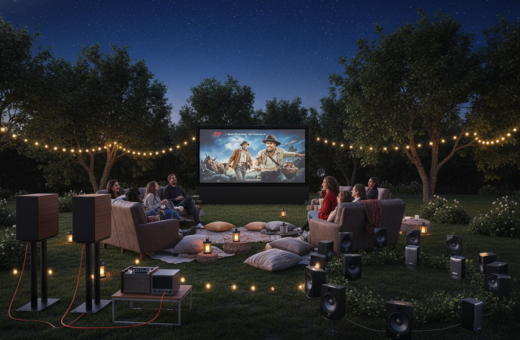
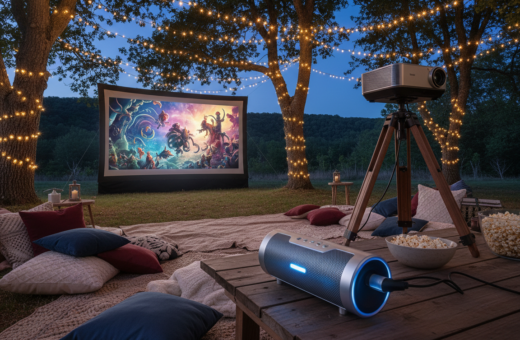
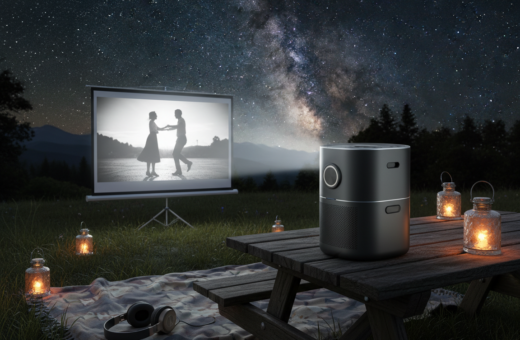
When a portable projector fills a wall with vibrant imagery, the audio should match that presence. Many users note that built-in sound lacks the depth to deliver a true cinematic feel. That gap makes reliable connectivity and solid output essential to any home setup.
Kanto REN offers a compact option that fits modern living rooms without stealing space. Its design balances bass presence and clear midrange, so dialog and music remain natural during a big game or an outdoor movie night.
Choosing dedicated speakers lets people avoid messy wiring while keeping a clean aesthetic. The best models use standard wired and wireless links so devices stay synced and the audio performance complements a 4K HDR image.
Upgrade focus should be on quality, range, and ease of setup. With the right pair, viewers get fuller sound, true stereo imaging, and enough power to fill a room while preserving minimalist design and practical use.
Why Your Projector Needs an Audio Upgrade
A crisp image needs matching audio; small built-in units often fail that test.
Most modern projectors ship with tiny drivers that deliver thin output and weak bass. That limited design sacrifices dynamic range and leaves dialog sounding distant.
Upgrading to dedicated speakers or a soundbar gives better sound and fuller stereo imaging. Viewers notice subtle effects and music that otherwise disappear with onboard gear.
The Kanto REN lineup earned praise at CES 2025, proving that compact units can boost audio quality without stealing space. They help keep dialogue front and center during a movie and add real low-end power to chase scenes.
- Built-in units often sound small and tinny, reducing immersion.
- External options reveal detail in music and effects, improving room acoustics.
- A quality audio setup turns visual excellence into a complete home theater experience.
Understanding the Importance of Low Latency Connectivity
Low audio delay is the unseen factor that makes or breaks a viewing experience. When sound lags, dialog feels detached and action loses punch. Projectors and external speakers must stay tightly synchronized to preserve immersion.
Standards and ports matter. HDMI ARC and CEC give a direct path for sound and control, which cuts down on sync issues. The Kanto REN lineup adds optical and AUX options, useful when a projector has only one HDMI port.
Bluetooth Latency Standards
Modern Bluetooth 5.0 and newer codecs have improved stability and speed. That reduces lag and gives more reliable output during gaming and live-action scenes.
When using a bluetooth speaker, confirm the projector supports low-latency protocols. Otherwise, even fast wireless links may produce lip-sync delays.
The Role of HDMI ARC
HDMI ARC provides a dedicated audio route that often beats wireless links for complex surround sound setups. It also lets CEC handle power and volume control, simplifying the entire setup.
- Low latency keeps dialog aligned with on-screen action.
- Use HDMI, optical, or AUX ports to maintain signal integrity.
- Proper connectivity preserves dynamic range and bass impact.
Top Bluetooth Speaker for Projector Movies
Picking the right portable audio system can transform a backyard screening into a true cinema night.
The Kanto REN tops the list with a 5.25-inch concave cone woofer and a 1-inch silk dome tweeter driven by a 200W Class D amp. It delivers strong output, clear midrange, and adjustable bass and treble via a handy remote. This makes it a versatile choice for any room setup.
The TREBLAB HD-360-Pro is the best portable option. It supplies 90W peak power, 360-degree sound, and roughly 20 hours of battery life. That range and power suit large outdoor screens and open spaces.
- The inclusion of an aux input helps connect older projectors and legacy devices.
- Wide frequency response ensures clear dialogue and deep bass at any price point.
- Versatile connectivity lets users switch between a projector, turntable, or game console with ease.
These options balance quality, power, and ease of use so viewers get cinematic sound without complex wiring.
Evaluating Sound Quality and Bass Performance
What moves air defines presence: the physical size of drivers shapes bass, clarity, and scale.
Driver size matters. Larger cones, such as the 8-inch woofer found in Klipsch The Nines, push more air. That yields deeper bass and an authoritative sound signature during action scenes.
The KEF LS50 Wireless II takes a different approach. Its Uni-Q dual-driver places a 1-inch tweeter in a 5.25-inch woofer and uses Metamaterial Absorption Technology to reduce interference. The result is a wider soundstage and more accurate audio performance.
“A well-designed system balances woofer and tweeter output so dialogue stays clear even at high volume.”
When assessing options, consider cabinet design and the ability to add a subwoofer. A dedicated low-frequency unit frees main drivers to focus on midrange and stereo detail. Ultimately, sound quality and bass should match the room and the intended setup.
- Large drivers = deeper bass and fuller output.
- Advanced materials improve clarity and room presence.
- Flexibility to add a subwoofer boosts surround power.
The Role of Portability in Outdoor Cinema
When a backyard becomes a screening space, mobility matters as much as fidelity.
Portability lets users place speakers where they deliver the best sound without hunting for outlets. Battery-powered projectors like the XGIMI MoGo 3 Pro are convenient, but they often pair best with a dedicated portable speaker to lift dialogue and bass.
The Ultimate Ears EVERBOOM pairs well with portable projectors. It offers up to 180 feet of bluetooth range, IP67 durability, and about 20 hours of runtime. That combination supports long movie night sessions and unpredictable weather.
- Durable, water-resistant designs keep the show going even when conditions change.
- 360-degree output fills an outdoor room so everyone hears clear dialogue and balanced bass.
- Power-bank charging and stable connectivity extend play time and simplify setup.
In short: the right portable speakers turn a simple screening into a true outdoor cinema that is easy to move, reliable in range, and strong in sound quality.
Comparing Soundbars Versus Bookshelf Speakers
Deciding between a slim soundbar and bookshelf units comes down to space, intent, and expected performance.
Soundbar Profiles
Soundbars often suit living rooms that value a clean design. Models like the Polk Audio Signa S4 offer a slim profile and easy setup. Many include a dedicated subwoofer to restore low-end punch without a large footprint.
Bookshelf Speaker Advantages
Bookshelf options reward placement and scale. The Edifier R1280T blends a classic wood finish with strong midrange and dual AUX inputs.
They support multiple speakers to expand into stereo or surround arrays. This delivers a wider soundstage and better stereo imaging than a single bar.
Choosing Between Form Factors
Which is right depends on room and use. Choose a soundbar to save space and simplify setup. Pick bookshelf units to prioritize sound quality and bass extension at a given price.
- Soundbars: slim design, straightforward installation, often include subwoofer.
- Bookshelf: richer tone, scalable into multiple speakers, better value per dollar.
- Decision factors: room size, design preference, intended setup (permanent or portable).
Essential Features for Seamless Synchronization
Reliable syncing hinges on how well a projector and its audio partner exchange signals. Ports and protocols matter: HDMI ARC and optical outputs create a direct path that cuts lag and reduces the chance of lip-sync errors.
Low latency is non-negotiable when viewing fast-paced scenes outdoors or in a living room. A high-quality bluetooth speaker with low-latency codecs helps keep audio aligned during an outdoor movie night without visible delay.
The Sonos Arc Ultra illustrates one end of the spectrum. With 14 drivers and 15 amplifiers it delivers immersive surround sound and supports Dolby Atmos, adding height channels that wrap sound around listeners.
Choose devices with multiple connectivity options — HDMI, optical, and wireless — so future projectors and music sources stay compatible. Adjustable EQ, auto-wake, and bass/treble controls let users tune sound quality to the room and content.
“Seamless synchronization is achieved when your projector and speakers communicate effectively, ensuring that the audio is perfectly aligned with the visual content.”
- Stable connectivity and low-latency links preserve dialog and timing.
- Power management and long runtime keep long sessions uninterrupted.
- Multiple inputs and EQ modes future-proof the home setup and improve overall output.
Optimizing Speaker Placement for Immersive Audio
Small shifts in speaker position can transform a flat listening zone into a true surround environment. Proper placement is the quickest path to clearer dialogue, fuller bass, and a wider soundstage. This section explains practical steps to get consistent output in any room.
Creating the Ideal Listening Triangle
For a stereo pair, symmetry is essential. Place each speaker an equal distance from the screen and angle them slightly toward the main seat to form an equilateral triangle.
Ideally, position speakers at ear level when seated so direct sound reaches listeners without reflection. If that is not possible, tilt them so waves aim at the seating area.
Single-speaker setups work best when centered below or above the screen. This helps dialog appear to originate from the picture rather than elsewhere in the room.
- Optimizing placement yields notably better sound with the same gear.
- Symmetry keeps the stereo image balanced and natural.
- Room features—ceilings, furniture, floors—change how sound travels; experiment to find the sweet spot.
“Taking time to tweak placement often delivers bigger gains than buying new components.”
Small moves reward users with improved sound quality and a more immersive setup that ties the speakers projector experience to the on-screen action.
Managing Wired and Wireless Input Options
A flexible input strategy keeps your audio chain ready for whatever device joins the show. The Audioengine A2+ demonstrates how multiple ports—3.5mm mini‑jack, RCA, and USB—make a system versatile and future‑proof.
Mix wired reliability with wireless convenience. Use a high‑quality HDMI cable as the primary path between a projector and an AVR when possible. That preserves the best sound and keeps lip‑sync tight.
If a projector has a single HDMI port, route video devices to the projector and feed audio via optical or an aux input on your speakers. Many units accept simultaneous inputs, so a DVD player and a console can stay connected without rewiring.
- Switching between sources should be simple—look for labeled inputs and quick input selection.
- Use multiple speakers or devices to create zones or expand output without long cable runs.
- Wireless links reduce clutter when the projector sits away from the listening area.
“Understanding input options lets users choose the right cables and settings for a seamless setup.”
Balancing Aesthetics with Acoustic Performance
A system that looks elegant should also deliver rich, accurate sound — style and fidelity can coexist.
The JBL L42ms revives a ’70s tabletop look with walnut veneer and a Quadrex grille while adding modern connectivity. It proves that premium materials can boost both visual appeal and acoustic output.
The ultra-slim Polk Audio Signa S4 shows a different path. At just 2.36 inches tall, it slips beneath a screen without blocking sight lines or remote sensors. That low profile keeps a room tidy and focused on the picture.
Design need not sacrifice performance. Contemporary engineering fits capable drivers and amps into attractive cabinets so listeners enjoy strong bass and clear midrange from compact units.
- Well-chosen finishes make speakers a visible part of decor and encourage regular use.
- Compact, low-profile designs preserve sight lines while delivering balanced output.
- Premium materials often improve resonance control and long-term durability.
“The right balance of form and function means gear becomes an integral part of living space rather than hidden away.”
Choosing options that prioritize both sound quality and design enhances overall audio performance and creates a cohesive home theater experience.
Durability Considerations for Backyard Movie Nights
Outdoor screenings demand gear that survives dew, dirt, and the occasional spill. Durability matters as much as fidelity when a portable projector and audio meet under the stars.
Look for solid ingress protection ratings. An IPX7 or IP67 rating guarantees resistance to splashes and brief submersion, which keeps a setup working through light rain or accidental drops in a pool.
The Anker Soundcore Flare 2 is IPX7-rated and compact, making it a reliable choice for an intimate movie night. The Ultimate Ears MEGABOOM 3 goes further: it floats, survives rough handling, and holds up at crowded outdoor gatherings.
Durable portable speakers also simplify setup and transport. Tough housings, cushioned grilles, and stable battery life reduce the risk of damage while moving gear between locations.
- Choose an IPX7/IP67-rated option to handle moisture and dust.
- Prefer compact, lightweight designs to ease carrying and placement.
- Check battery life and recharge time to avoid interruptions during long sessions.
- Consider build materials—rubberized edges and sealed ports increase longevity.
“A rugged, weatherproof option lets hosts worry less about the elements and focus on sound and picture.”
In short: investing in durable, water-resistant gear is a smart choice that preserves quality, saves time, and protects the price paid for a dependable outdoor movie setup.
Advanced Audio Technologies for Modern Projectors
Immersive audio tech now lets sound move above and around listeners, not just from left and right.
Dolby Atmos and spatial audio deliver a true three-dimensional soundstage. Modern projectors can decode Atmos streams, so audio objects appear overhead and behind the listener. That upgrade turns a living room into a convincing home theater.
How it changes listening
Spatial audio decodes complex soundtracks and places effects precisely. Viewers hear subtle details and directional cues that standard surround sound cannot reproduce.
The Sonos Arc Ultra uses Sound Motion technology and a four-motor dual‑membrane transducer to extract deep bass from a slim design. That design proves high output and low-profile aesthetics can coexist.
“These technologies require speakers built to handle height channels and advanced digital routing.”
- Spatial formats need devices with multi‑channel decoding and accurate timing.
- Many high‑end speakers now support ultra‑high‑resolution playback for clearer music and film sound.
- Choosing Atmos‑capable gear future‑proofs a setup and improves overall sound quality and performance.
Integrating Multiple Speakers for a Wider Soundstage
Pairing compatible devices scales output and widens stereo imaging without adding complex wiring.
Using multiple units creates a broader sound field that improves separation, depth, and realism. True Wireless Stereo (TWS) pairing links two devices into a left/right array, while brand-specific systems like JBL PartyBoost and Ultimate Ears PartyUp let users chain many units for larger areas.
For an outdoor movie night, adding portable speakers around the viewing area ensures even coverage so dialog and effects reach every seat. Many modern products support multi‑room or multi‑speaker connectivity, making expansion simple as needs grow.
- Create a wider soundstage to match sweeping soundtracks and fast action.
- Use TWS for stereo imaging; use PartyBoost or PartyUp to scale to dozens of devices.
- Choose systems that support flexible connectivity and easy syncing to future‑proof the setup.
“Building a sound bubble with multiple units achieves immersion that a single device cannot match.”
Want guidance on adding external speakers? See practical advice on external speakers and connectivity, or explore multi‑room ideas on this sample page.
Conclusion
Properly matched audio gear brings clarity, punch, and presence to every scene.
Investing in high-quality external speakers is the most effective way to elevate a home projector setup. They restore dialogue, widen the soundstage, and add meaningful bass that built-in units often lack.
Choose a soundbar, bookshelf pair, or a portable option based on room size, connectivity, and placement. Pay attention to HDMI, optical, and low-latency wireless sync to keep sound aligned with the picture.
Modern formats like Dolby Atmos and multi-unit linking make pro-level immersion accessible. With careful placement and the right gear, each viewing becomes a memorable, theater-grade event.
In short: balance connectivity, placement, and acoustic needs to find a solution that fits budget and delivers lasting quality.