The way people arrange their audio gear changes how they enjoy an evening film or live music in the yard. Choosing between a simple two-channel setup and a larger multi-speaker layout requires balancing ease of use with immersive power.
In 2024 many homeowners build a backyard home theater and ask how much equipment and power they really need. Modern video displays rarely deliver deep bass, so an external sound system often becomes essential.
A small stereo surround configuration can deliver clear sound and strong vocals in compact spaces. Larger systems can fill wide areas but need careful placement and more power to avoid uneven coverage.
Understanding these differences helps people pick the right speakers, match amplifiers, and create a better overall experience for both music and a favorite movie night.
Understanding the Basics of Audio Channels
A basic grasp of channel roles lets homeowners match speakers and gear to their listening goals.
Defining Two-Channel Sound
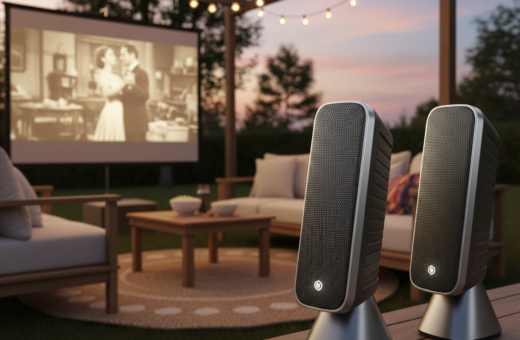
Two-channel playback depends on a pair of speakers placed to the left and right of the listening area. This layout creates a balanced soundstage that highlights vocals and music clarity.
For music listening, a two-speaker system often delivers the best return on investment. It keeps setup simple and focuses on imaging and tonal accuracy.
The Mechanics of Multi-Point Systems
Multi-point systems use five, seven, or nine speakers to send sound from different directions. That design adds spatial cues and a realistic sense of space for cinematic content.
A dedicated receiver manages multiple channels and routes the correct signal to each speaker. Proper channel assignment and placement are crucial to avoid gaps in coverage across the room or yard.
- Two speakers create a clear left-right panorama for music.
- 5, 7, or 9 speaker setups reproduce directional effects and ambient detail.
- Receivers ensure each channel receives the correct audio stream.
Comparing Stereo vs Surround Outdoor Movies
Speaker placement and channel count shape whether a garden screening feels intimate or cinematic.
Primary difference: a two-speaker setup sends sound mainly from left and right. That makes dialogue and music clear, and it is easy to set up.
A multi-channel system spreads audio across the space. It places effects around listeners and can reproduce complex mixes from modern theater shows.
- Two speakers give strong imaging for music and simple video programs.
- A 5-channel layout adds depth, direction, and a realistic movie experience.
- Adding Dolby Atmos height channels delivers better sound and a true home theater feel.
People who want a lively, cinematic experience will favor a surround sound system. Those who prioritize music and simplicity often pick a stereo sound setup.
Evaluating Your Outdoor Space and Layout
A quick, practical survey of the viewing area guides every sound decision.
They should start by measuring the seating footprint and noting walls, fences, and hard surfaces that reflect sound. This helps decide whether a compact audio setup or a larger system will deliver consistent quality.
Optimizing for Small and Large Areas
For small spaces, a compact stereo system or a 3-channel surround sound arrangement can provide clear audio without overpowering the area. Two speakers or a modest center channel keep dialogue and music crisp while minimizing echo.
Large lawns and open patios benefit from a 7-channel layout that spreads sound evenly. Proper left right placement and delayed channels reduce dead zones and preserve the listening experience across the space.
- Consider weatherproof speaker models and a weather-rated receiver for permanence.
- Balance music needs with movie playback when choosing speaker count and power.
- Adding Dolby Atmos height channels can lift the theater feel even in tricky layouts.
The Role of Frequency and Sound Quality
Bass, midrange, and treble shape whether audio feels full or thin in a given space.
The Importance of Bass Frequencies
The lowest octaves control impact. The subcontra band (16–32 Hz) is mostly felt and adds visceral weight during action scenes.
The contra (32–64 Hz) and great (64–128 Hz) octaves give musical foundation and kick-drum punch. Good speakers and a powered subwoofer ensure these bands remain tight and controlled.
Understanding Octaves in Audio
Human hearing runs roughly 20 Hz to 20,000 Hz. Each octave doubles frequency, so 16–32 Hz equals the space between 8 kHz and 16 kHz.
- Small octave: 128–256 Hz—male voice fundamentals and warmth.
- Two-lined octave: 512 Hz–1 kHz—critical for clarity.
- High octaves (4–16 kHz) add air and shimmer.
Clarity and Speech Intelligibility
Speech intelligibility depends on the 512 Hz–1 kHz band. A balanced audio system and correct receiver tuning keep dialogue present in both music and film content.
For more technical comparisons, see this discussion on comparing movie sound quality.
Modern Solutions for Immersive Audio
New all-in-one solutions make immersive audio accessible for homeowners who want simple setup and big sound.
Products like the Skywave X100 Dual pack Dolby Atmos and DTS:X decoding into a compact system. They create height and movement that lift the movie and music experience without many discrete speakers.
These units also simplify power and receiver needs. Wireless connectivity and smart room tuning deliver consistent sound quality across a yard or patio space.
Benefits include clearer dialogue, deeper low end with a single powered sub, and less time spent on placement. A simple upgrade can change the whole home theater setup.
- Supports object-based formats for a realistic soundstage.
- Fits varied spaces and reduces cabling and installation work.
- Improves both music playback and the movie experience for groups.
In short: modern audio systems let people enjoy near-theater audio without a complex multi-speaker install. The result is better sound with less effort.
Selecting the Right Equipment for Your Needs
Picking gear starts with one clear question: what will people watch and listen to most in the space?
Budget, space size, and content type drive selection. A compact audio system can suit music nights while a larger setup handles cinematic shows and gatherings.
A quality receiver matters. It allocates power and channels to each speaker and keeps signal routing efficient. Choose a unit that supports modern codecs and has enough outputs for future expansion.
Investing in reliable speakers and a solid amp gives better sound quality over time than cheap gear. Proper left right placement or a full layout is essential to avoid dead zones in the room or yard.
- Match speaker power to space and seating footprint.
- Prioritize a receiver with room correction and network features.
- Pick equipment that supports Dolby Atmos and common streaming formats for future-proofing.
For many homes, a modest upgrade delivers noticeable gains. They should plan placement, power needs, and connectivity before buying to ensure the best home audio experience.
Conclusion
A clear plan for placement and gear choice helps the space deliver consistent sound and a richer audio experience. They can choose a compact stereo sound layout for music nights or a fuller surround sound system for a cinematic home theater feel.
Quality speakers and a capable receiver matter most. Good components and thoughtful tuning make any system perform better across a yard or patio, keeping dialogue clear and bass controlled.
Ultimately, the right audio system matches budget, space, and use. With basic channel knowledge and careful selection, homeowners will improve music playback and the overall listening experience for gatherings at home.