Hosting a movie night can turn an ordinary summer evening into a memorable party for family and guests. But poor planning often leaves the space feeling cramped and cluttered instead of open and inviting.
Key causes include oversized screens that dominate seating, projectors placed in traffic paths, and tangled extension cords that create trip hazards. Lighting and sound choices also shape the experience; harsh lights wash out the image while weak speakers make conversation difficult.
Pynx Productions offers professional help to tailor equipment and design to each yard — call 1-877-654-3210 for expert service. Hosts who balance screen size, lumen needs, and cable routing keep sightlines clear and comfort high.
For practical layout ideas and installation tips, see this backyard movie theater guide. With thoughtful design, the right projector and a quality sound system, an outdoor movie night feels spacious and relaxed.
Understanding Small Backyard Movie Setup Mistakes
Many hosts underestimate the space projectors, screens, and speakers claim, turning a pleasant night into a tight squeeze. Overcrowding often starts with not measuring the equipment footprint and where guests will walk.
Common errors include choosing a screen that dominates the yard and ignoring the power draw of professional projectors and sound systems.
“Plan for cords, weather, and setup time—these details decide whether the evening feels relaxed or rushed.”
- Book rentals 2–4 weeks before peak summer dates to avoid limited equipment and higher costs.
- Map power needs and tape or route any extension cords to keep walkways clear.
- Allow up to two hours for complex equipment so arrival and setup don’t spoil the event.
One practical tip: consult a concise backyard movie night guide for layout and power planning. Addressing these things early keeps the outdoor movie experience calm and enjoyable.
Strategic Spatial Planning for Outdoor Theaters
Good spatial planning keeps sightlines clear and walking paths open so guests can enjoy the evening without crowding. Before finalizing the layout, measure the viewing area and plot where chairs, the projector, and the screen will sit. This simple step saves time and keeps the event feeling professional.
Measuring Your Viewing Area
Viewers should sit about 1.5 to 2.5 times the screen width from the display for comfort. For example, a 100-inch screen is roughly 87 inches wide and needs an 11 to 18 foot viewing distance. Use that range to place seating and the projector so the picture fills the field of view without forcing guests to crane their necks.
Identifying Potential Obstacles
Scout the yard during the day to spot uneven ground, low branches, or fences that could block projector light or destabilize chairs. Place the movie screen away from distracting light sources such as street lamps to preserve contrast and color.
- Power and cables: use a 12-gauge extension for runs over 50 feet to keep the projector system steady.
- Speakers: position them to provide balanced sound across the viewing area so everyone hears clearly.
- Walkways: keep paths clear to prevent trips and to allow guests to arrive and leave without disrupting the screening.
Following these tips helps create an outdoor movie theater that feels spacious and organized, improving the overall experience for every guest.
Selecting Equipment That Fits Your Footprint
Match gear to the available space so the picture and sound feel balanced. Measure the viewing area first, then choose a projector and screen that fit that footprint. This reduces glare, crowding, and awkward speaker placement.
Choosing the Right Screen Size
A 120-inch 4K screen can deliver a cinematic picture for roughly $104, but it needs room. If the viewing distance or walkways are tight, a smaller projector screen preserves comfort and sightlines.
- Lumens: pick a projector with at least 9500 lumens to keep the picture visible with some ambient light.
- Power draw: modern projectors use about 65–150 watts; add 50–100 watts for speakers when planning power.
- Streaming: use a Fire TV Stick or similar to stream movies without complex AV gear.
- Placement: position the projector at the correct distance to avoid keystone distortion and soft focus.
- Extension: always use an outdoor-rated extension cord sized for the system’s power needs.
“Balance screen size with available space to create a professional outdoor theater without crowding.”
Optimizing Seating and Guest Comfort
Arranging seating for easy access and good sightlines turns a casual gathering into a polished viewing event. Hosts should balance comfort and circulation so the screen and projector stay unobstructed and guests move freely.
Arranging Flexible Seating
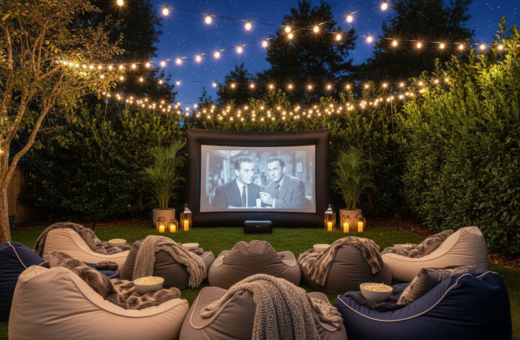
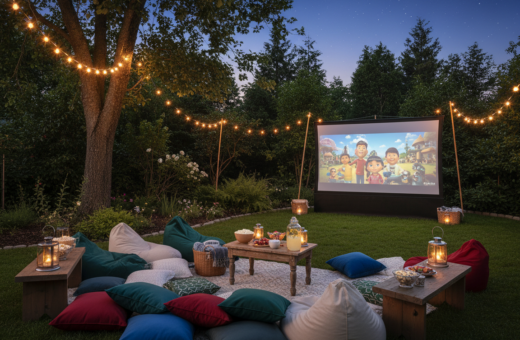
Use a mix of folding chairs, bean bags, and low benches to suit different ages and preferences. This variety keeps the theater feeling relaxed and prevents a crowded impression.
Place chairs on gentle curves rather than straight rows to improve sightlines. Keep a few extra seats nearby for late arrivals.
Creating Walkways for Guests
Design clear paths that avoid cords and gear. Use solar lighting to mark routes and keep the main viewing area clear for everyone.
- Map power runs and use an outdoor-grade extension to protect guests and equipment.
- Reserve a separate snack and drink spot so people do not block the viewing space.
- Position speakers around the seating zone to deliver even sound.
Adding Cozy Touches
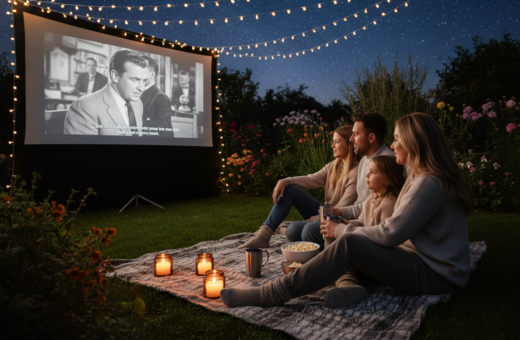
Temperatures can drop by 15 degrees as the night progresses, so offer soft blankets and warm throws. Small lighting accents and a clear layout lift the party atmosphere.
“Comfortable seating and clear walkways make the viewing experience feel thoughtful and professional.”
Managing Power and Environmental Factors
Ensuring steady power and guarding gear from the elements prevents interruptions during the show.
Start with reliable wiring. Use outdoor-rated extension cords and 12-gauge for runs over 50 feet to avoid voltage drops that dim the projector picture.
Avoid daisy-chaining power strips or multiple connectors. That practice can lower system quality and risk failure for the screen and speakers.
- Elevate electronics off the ground during a warm summer night to reduce moisture risk.
- Have covers ready for wind, dew, or sudden rain to protect the projector and other equipment.
- Verify streaming connections well before guests arrive to prevent interruptions.
- Inspect all cords for wear before every showing and store gear in a climate-controlled area after use.
“Always allow the projector to cool for 5 to 10 minutes after the screening to protect the lamp and electronics.”
These steps keep the outdoor theater safe, professional, and ready for guests. Make sure power and weather plans are as carefully chosen as the seating and sound.
Conclusion
A successful movie night depends on planning gear, seating, and pathways so the evening feels open and relaxed.
Test the projector, screen, and speakers the day before to resolve glitches early. Check lumens and power needs, and use an outdoor-rated extension to protect equipment and guests.
With a clear layout and attention to safety, hosts create a quality outdoor movie experience the whole family will enjoy. These practical tips help any host, whether aiming for a casual backyard movie or a full outdoor theater evening.